
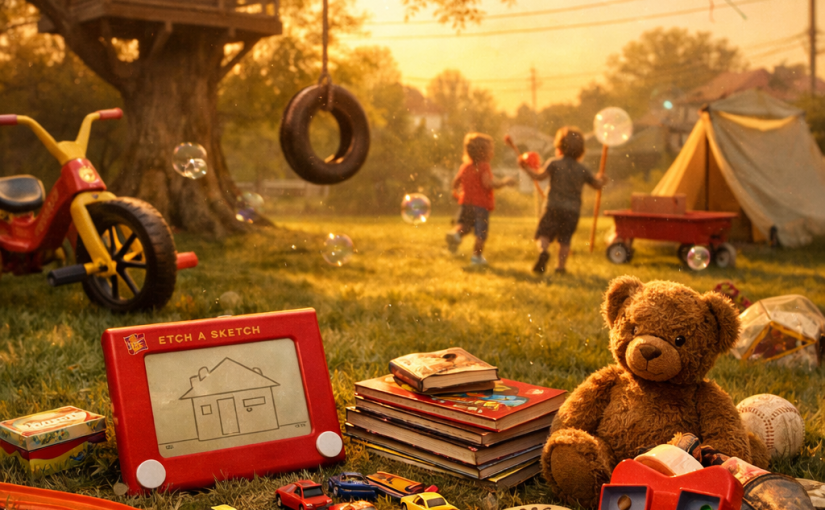
I love the fragrance of Hawthorn blossom. As children, we played in the fields down Herod’s Hill under the large May tree. As boys, we used to show off to the girls, so we climbed the tree, jumped off the lower branches trying to avoid the brook immediately beneath. However, the girls gave more attention to any boy who fell into the water, rather than lauding those more likely to end up in the infantry when conscripted for Military Service.
The tree was downstream of two bridges carrying railway lines from Silver Hill and Brierley collieries to a point where they joined the Leeds-Derby LMS main line. These were the days when local coal fuelled jobs in local manufacturing and everyone who could work, did so.
Miners walked home from the Pits covered in black dust. It was nineteen forty-nine before every local colliery had Pit-Head-Showers and so each house had a galvanised tin bath hanging on an outside nail. Outside closets were emptied fortnightly by a small Foden lorry which, as it journeyed around the village, left behind a miasmic cloud of dubious fragrance.
Whilst the Foden chugged up our steep hill, children ran alongside chanting, “The Corporation Muck cart was full up to the brim, the driver fell inside and found he couldn’t swim. He fell right to the bottom. – I shall spare readers the ending – but when news of our poetic talent reached Police Constable Greatorex, he let it be known that if he heard any budding George Byron or Edward Lear they would receive a clip around the ear.
Ah, those were the days of childish carefree penniless naïve youth! The war was over, we had won! Much was being said about a land fit for heroes, and a rose-tinted future lay ahead.
I left school on a Friday in April nineteen fifty-four and started work on the Monday. For the next five+ years, work was interspersed with Night School, Part time day release and Residential courses, followed by National Service in Southern Yemen. In nineteen sixty-one, I came home to a Britain which had a workable public social balance between the Thinkers the Talker/Analysers and the Doers.
We were free within limits. The Thinkers and Talkers did not trouble themselves with what, ‘Doing’ meant, nor to those who made the products sold at home or exported abroad.
The balance between doing and talking again changed as de-industrialisation was encouraged by a belief that our national future depended on more educative thinking and analysis. But, ‘doing’ things was still not understood by academics and politicians and so, as a nation, we were busy but, ‘making’ less.
The balance has changed again. AI is full of data and can analyse using the mathematical capabilities of spreadsheets. But this time it is the thinkers and analysers, not the doers who find themselves redundant.
This highlights how important it is not to solely rely on AI. If we do, we shall not develop the neural pathways which allow groups of neurons to flow and form our self-awareness and memories. Evidence already shows that formation is being retarded in many young brains today, resulting in a less defined personal identity than earlier generations.
To have a settled foundational sense of self within society, we need to develop internal memories. In nineteen forty-three Grandad Wells would sit in the rocking chair balancing me on his lap and we would play, Little piggie.
“This little piggie went to market, this little piggie stayed home, This little piggie ate all the rice pudding, and this little piggie had none, and this little piggie cried wee wee wee all the way home.“
Grandma Wells would blow up a pig’s bladder to make a Balloon, and we would all bat it around the cosy living room of their Fish and Chip shop.
These are just two of many loved memories comprising my own formation before school.
What, I wonder are the early foundational memories of readers?

