Last month I stated that neither Socrates or Jesus wrote anything but that lots of evidence for them exists from numerous sources including friends and opponents.
I also said that both had died: not for what they had done, but for speaking words their community leaders would not tolerate. Interestingly, it was the local religious elite who condemned Jesus, but the locally elected ‘demos’ elite who condemned Socrates.
The Jerusalem bubble and the Athenian bubble could not tolerate any speech that did not fit in with its own narrative of life and so, like the London bubble today ‘Shot the Messenger.’ ( A Bubble is an insubstantial thin-skinned drifting object containing only tepid air and is easily pricked. It often leaves a nasty stain when it bursts on coming back down to earth.)
It is always pleasing when a reader asks a question, the most recent seeking a brief elaboration of what Socrates taught about virtue.
He was after the truth. He asked a lot of ‘What’ questions,’ no if’s no buts. He needed a fruitful state of mind and a life in which he would be fulfilled and at one with himself, nature, and other humans. A sense of an absolute; the ultimate fulfilment he called ‘Eudaimonia.’
He concluded that Eudaimonia could be attained only by ‘living a virtuous life. Virtues being the mid-point between two vices.
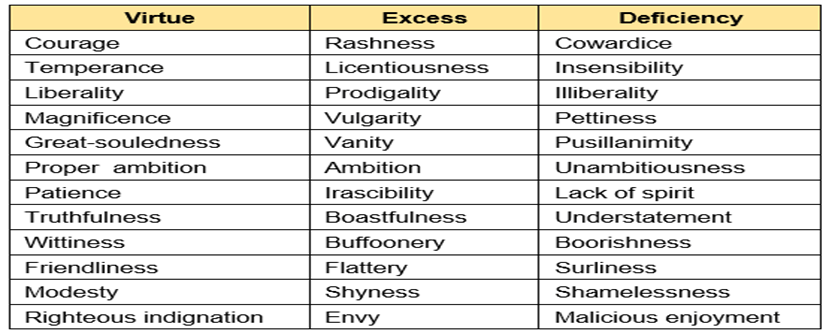
Readers can muse for themselves on his list, but I note that Eudaimonia has echoes with the Salvation ideas of the Indian religions of Buddhism, Hinduism, Jainism and Sikhism. (For more, type the word Soteriology into Google to discover how the Christian message of Salvation differs from that of all other religions).
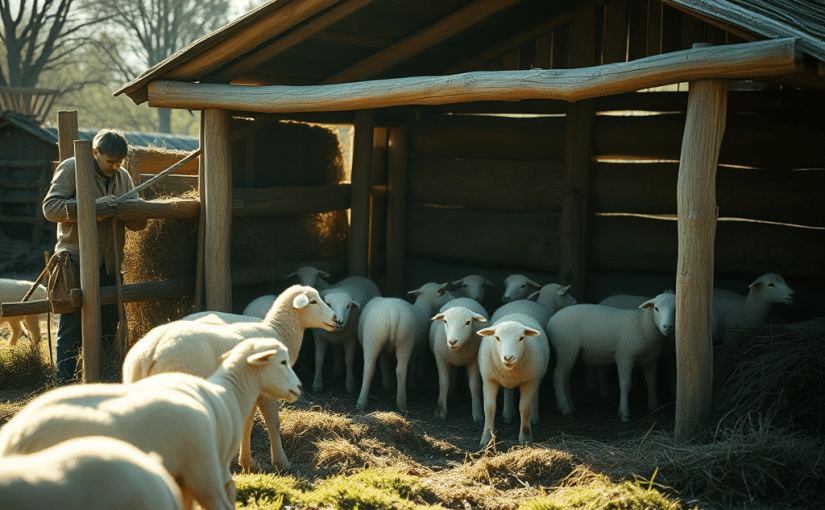
Some readers know that Marie and I have decided to sell our remaining sheep. It can be hard work and although neighbours, family and friends have been helping for some time, we do not want this to become an imposition.
I am not looking forward to seeing, empty sheds where once newborn lambs nestled close to their mums, or under orchard trees where new lives gathered, or the silent rolling slopes I stride to where, in my mind’s eye, I ever shall see lambs chasing up and down and where wistful mums, discarding matronly poses would join with their offspring in joyous gambolling of youth.
I shall also feel the desolating silence of those once purposeful bustling factories I had to close and empty during an industrial career. Closed because the market had moved on, or foreign places became more attractive to the managers of investment schemes including pension funds. To close a factory and to see its machines, equipment and jobs being shipped abroad can be heartbreaking and can taint the souls of all whose lives were once conjoined to making that which others needed or just wanted.
I don’t know which is worse for the soul. To empty a factory or to empty a sheep shed.
In the opening paragraph, I said Socrates sought answers to the big questions of life. Question such as, does it have any meaning or purpose other than that given by humans themselves?
Then, and now, the big questions are those to do with meaning and purpose.
Does a materialistic philosophy and a soulless technology driven by man’s insatiable desire for knowledge and control give us answers? I think not.
What, as Socrates would say; Thinkest Thou?
 View from the Pew