Some years ago, I entered a rural church in the north of England, where the Reader for the day was known to occasionally struggle with his pronunciation. When the time came for the reading from the Old Testament, he stood at the lectern and said, “The first lesson today is from the book of Ec.. Ec.. Ecce – lasticals.” My mind hurriedly scanned its list of Old Testament books and perversely came up with the thought that Ecce – lasticals might have been a moral pamphlet, issued during Victorian times, advising the clergy against wearing support stockings.
I quickly dismissed that idea, and was relieved when the Reader wisely also read Psalm 23 which commences; “The lord is my shepherd; I shall not want.” The psalm then goes on to outline how God deals with us, in ways similar to the way in which we deal with sheep.
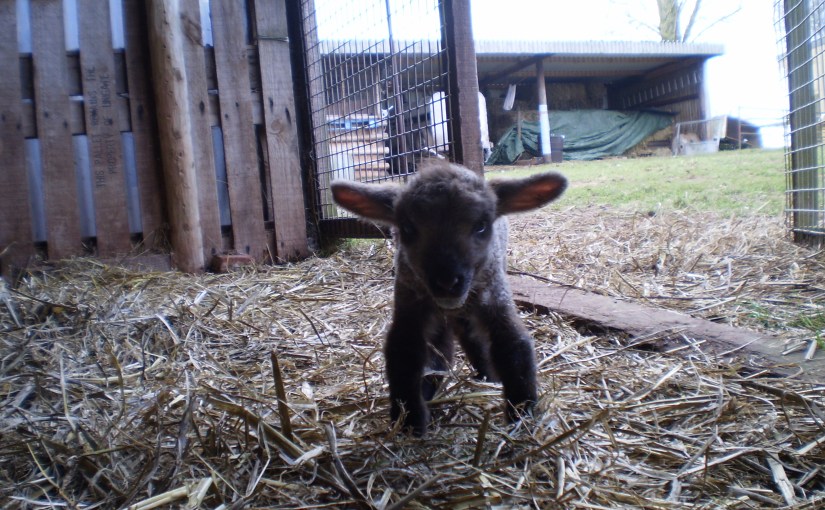
Sheep figure a lot in the scriptures and there is no doubt that our ancestors knew a lot about them. Amongst other things, they knew that sheep prefer to breed with sheep that look physically like themselves.
This poses the question as to how a particular sheep knows what it looks like. It doesn’t have a mirror and so must take its self-identity as being an image of those around it. I suspect that humans are not a lot different and that we too identify ourselves as an image of those around us. Unlike a sheep however, which takes all its self-identity from others within the flock, we are more complicated and take our identity from various social groupings
Because our own self-image has different facets we rarely want a single designation to be understood as saying all there is to say about us, and we would probably jib if others insisted on labelling us through the filter of a single stereotype.
For example, some people would label honest rural folk as Peasants, Yokels or Bumpkins. However the true countryman / woman knows that there is much more to his neighbours that that. He knows that just as one sheep differs from the next, there are different facets to his neighbour’s life. He knows that a teacher, a clerk, a farmer or an accountant is also a skittler, bingo player, WI member or gardener who also occasionally attends St Mary’s, St John’s or St Bartholomew’s.
I expect that each of us see ourselves as having many roles and more than one identity. There are however many common threads. We all live amongst rural beauty with lots of space, hedges, ancient narrow lanes, wooden gates, old houses and historic churches. Like our ovine friends we see the night sky free from light pollution but, unlike our sheep, we can choose to take our identity from our family, our hamlet, our work, our hobbies and the lovely old church we, from time to time, attend.
 View from the Pew