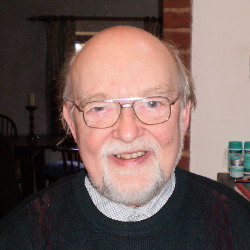

Last month I wrote about Giddy our Ewe who we ‘put down’ at the age of nearly fifteen. I said she was a friend but not a pet. We see friends as equals whereas to call animals pets, assumes a quite different relationship. There is an old ‘country saying, “ Cats look down on ye.’ Dogs look up to ye. But Pigs: Them’ll look ye in the eye.’ This demonstrates an ancient interaction between humans and animals. Each has a role in the hierarchy of nature, and stress will occur all around unless the roles are clear.
However, roles become blurred when humans view animals as pets. For example, most dogs have a genetic background which predisposes them to the behaviours originally required for a specialised working relationship. This means that pet owners need to be clear as to an animal’s in-bred instincts. If an owner does not work with these, the animal will, in the words of Sigmund Freud, be ‘repressed’ and so under constant stress.
Sometimes however the boot can be on the other foot, and behaviour by animals can stress humans. The screechy high-pitched squeals of young pigs will make a person ‘Feed the squealing pigs first.” and I often see this dictum reflected in the reaction of authorities when they allow more leeway to a mob of shrieking protestors, than they would to an individual.
A good stockman however remembers the whole of the flock, and the New Testament tells us of one who. “knew his sheep” and even cared for the lost one. I only wish I could believe that the leaders of our National Institutions today were good stockmen and women and did not listen only to the noisy end of the spectrum of opinion and aspiration.
Thoughtful educated observation is essential to be an experienced expert in husbandry, and these characteristics prompt me, to share a few occasions in my life when I have been portrayed as an expert.
For some years I worked for one of the International Management Consultancies known for their expertise in manufacturing systems. Whatever the job, they had the expertise and solutions at hand. At least that is what they said! The directors did the selling and expected their consultants to deliver solutions.
On one occasion I was finishing a production planning job in Newcastle and was told that next week my client was a company in Leighton Buzzard. The new company needed an expert in Quality Systems, and so I was asked if I knew anything about the newly launched British Quality System Standard BS 5750. I replied I knew nothing. ‘Not to worry’ they said, a copy is in the post and I could read it over the weekend.
It did not arrive, nor had the internet been invented, and so on Monday at 9am I met the Board of Directors having never read the Standard and totally ignorant of its purpose or any of its detail. I survived only because I had run factories and was not ignorant of manufacturing technologies, process methods and techniques. Nor was I unskilled in getting information and making sense of what I was being told.
I got through day one without any loss of client confidence, but that evening drove halfway home to meet Marie and pick up the documents which had arrived that morning. I stayed up most of the night reading, and so my knowledge of the subject steadily increased to the point where The Tarmac group wanted me to work also in their Scottish factories. Soon I really did become the Consultancy’s expert in quality management systems.
A year later I was similarly mis-represented as an ‘Expert in Statistical Process Control.’ (SPC.) This time I had two days advance warning but gained an industry reputation for practical applications of SPC for attributes (variables) and characteristics in garment manufacture.
I usually advise scepticism of experts because I understand both their strengths and fragilities. We should however look for what is missing from data and also ask who benefits from a particular interpretation of the data. Experts invariably draw differing conclusions from data. But I am sceptical of commercial advertising that emphasises benefits and minimises or ignores deficiencies, as also do campaigning groups including many with charitable status. What, I ask myself, is in it for them? In the case of commercial companies it is simple: income minus cost = surplus/profit. But, in the case of other groups it is much more complicated as motives are more easily obscured from public gaze..
Finally, even the folks presenting Statistics sometimes appear not to know what they are doing, as happened when one report contained the headline:
“Teen pregnancy drops off significantly after age 25”
To see more Views type www.viewfromthepew.co.uk into the ‘search’ box of your search engine. Or type https://viewfromthepew.co.uk into the address bar at the top of your computer screen.
When you are on the site, go to the left column and click View from the Pew.
 View from the Pew