This month I want to ask you about AI, which is an acronym for two words. Which of these two words is the most important:
Artificial or Intelligent? (Answer this aloud and continue)
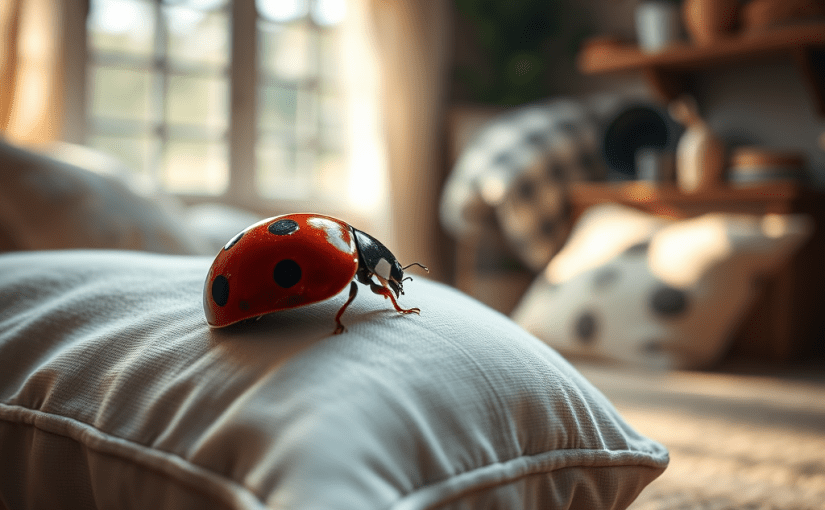
But now an observation. For some weeks on awakening, I have found a ladybird on my pillow. Whether it is the same insect every day or one of a group taking turns I do not know.
I can speculate that it may have something to do with warmth or ask if it is an inner yearning for human company. In either case, she is a creature which nature dictates should be hibernating with her chums in the window frames of our old cottage?
Every morning, I carefully take her to rejoin the colony which is continuing its natural winter slumber. Should this individual persist with its present behaviour she will soon realise that she is on a road to perdition. Not by my hand but by nature, A nature that has a purpose for her once the season changes.
We know that the word ladybird is derived from the Latin word coccineus meaning ‘scarlet’ and, that the name of ladybird came about because Mary the Mother of Jesus, known as “Our Lady,” was often depicted in early art as wearing red. The seven spots of the most common British beetle, were then represented as her seven joys and seven sorrows.
Perceptive readers may also note that, like the ladybird, humanity also has a purpose in life but that, unlike her, we were created as immortal spiritual beings.
However, the story of Adam then explains why we are now Spiritual beings, but who now live within a material body and have a lifetime to fulfil that purpose.
From earliest times humanity has looked for its purpose, and I find myself most attracted to those purposes that seem to express a timelessness, rather than an immediacy.
This thought then leads me strangely to something which is not really a purpose but nonetheless seems the most powerful driving virtue for humanity.
It is the word Love, which, in its highest expression is ‘Selfless unconditional desire for the good of another.’ Unconditional i.e. to the point of total surrender of self. I suppose that is why better minds than mine coined the phrase, The Love of God which Passeth all Understanding.’
Many say that God created us because his Being is love and so he can do no other. This brings us back to my question regarding your decision of importance between Artificial or Intelligence.
To those who answered Intelligence, I point out that Humanity is neither holy or perfect, nor does anything about our present world suggest that a sudden change for the better is probable or imminent.
AI is a construct of human minds, and we know human minds can range anywhere between indifference towards others, to obsession with self and even objects. It can perceive and strive for the highest forms of Godliness or willingly submit to evil Satanic forces. These are the same minds which designed and programmed AI.
Personally, I regardAI as a utilitarian tool. It has no Soul and no ‘Being’ and so I check its outputs against the highest criteria available. Which brings me to repeat last month’s conclusion on what criteria to use when looking to find what is virtuous and what is worthy of your praise.
I quoted St Paul’s letter to the Christians in Philipi (4:8)
Finally, brethren, whatsoever things are true, whatsoever things are honest, whatsoever things are just, whatsoever things are pure, whatsoever things are lovely, whatsoever things are of good report: …; to find what is praiseworthy and virtuous …….. think on these things.
I jokingly told AI my favourite music is Classical, but it could only reply in Algo rhythms.
 View from the Pew