Living in a rural parish is an experience that most people in this nation of sixty million will never have. As a result they miss the opportunity to understand how our ancestors experienced the connections between the seasons, the church calendar and the fellowship of working with livestock and the land.
We have an example of one such communal activity in the Gloucestershire custom of Wassailing which includes a song featuring the dairy cow Fillpail :
And here is to Fillpail and to her left ear
Pray God send our master a happy New Year
And a happy New Year as e’er he did see
With the wassailing bowl, we’ll drink to thee.
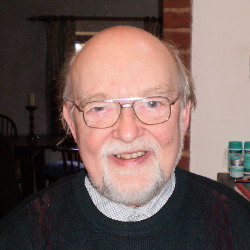
Like many residents of our Benefice I was not born in one of its Parishes. Although spending most of my life in various capacities connected with manufacturing, my early years were spent around small farms and so my wife and I were not entirely ignorant of agricultural matters when we bought our own registered smallholding.
A typical smallholder activity is to keep honey bees and these I had already kept for many years, however I knew little about sheep and so was grateful for the support given by retired farmer Allan Evans from whom we had purchased our cottage. Nonetheless we both embarked on a new learning phase in our lives through courses, talking and helping others, and, of course, reading books and magazines. (The internet was not around in those days.)
One of the books I read was about traditional farming practices, but it also covered ancient customs and the author mentioned a custom which had died-out but which was he said, “Last held in 1924 at a place called Pauntley in Gloucestershire.”
This was the ceremony of Judas Fires and the book related how during the middle-ages it was the custom on Plough Sunday for ploughmen to gather and light fires representing each of the twelve apostles, and to then examine the embers and predict what the harvest was likely to be. The fire representing Judas was then stamped out by children prior to the evening ending with cake and cider.
The ceremony was held on the Sunday after Epiphany lying between 7th January and 13th January and which heralds the beginning of a new agricultural year. Plough Monday used to be the time when work in the fields began, although this practice has now changed as winter-tolerant crops mean that fields are ready for planting within a few days of harvesting, and ploughing has largely been superseded by various minimum tilling (min-till) attachments to the tractor.
It was exciting then to discover another Gloucestershire custom in addition to that of wassailing, and this prompted me to further research the tradition of Judas Fires. I soon realised that it was not possible to precisely re-enact the ancient ceremony because nowadays there are not many ploughman around, and in any case the harvest is predicted by satellite rather than by hot ashes.
Instead, I decided to research the lives of the apostles and to make them the focus of a Pauntley re-enactment. I justified this change on the grounds that the original apostles had been asked by Jesus to become ‘harvesters of men’ as a change from their being harvesters of fish or, in Matthew’s case taxes.
Our modern ceremony features local men who each light a small fire and read a few words about the apostle he represents. Such is the interest that this year we had to expand the number and ended up with fifteen Saints. However, children are still able to stamp out the Judas fire whilst the others simultaneously put their own small fires onto the larger ‘Jesus Fire’. Finally, about fifty parishioners then shared such food and wine as our ancestors would have envied.
Agriculture has seen huge changes since those early days of strip farming. Chemical, biological and mechanical technology has revolutionised food production and yet we still depend on the labour of those who plant, tend and harvest crops. Thank goodness our parishes are still able to collectively give thanks for our blessings, by sharing in the traditional services and associated customs of our nine parish churches.
Talking about rural traditions however, reminds me that every new Pope traditionally makes a visit to Ireland where he proclaims a blessing upon a local farmer.
During one visit an elderly worried looking farmer quietly said to the Pope. “Holy Father please can you do something about my hearing.”
Placing his hands over the man’s ears and in a strong voice the Pope proclaimed,
“Te absolvat Dominus Jesus Christus; ego enim eius auctioritate te absolve ab omni vinculo. Dona Non nobis, Domine, non nobis, sed nomine Tu o da gloriam.”
As he removed his hands the Pope whispered, “How is your hearing now?” to which the farmer replied,
“I don’t know Father, it’s not until Wednesday.”
 View from the Pew