
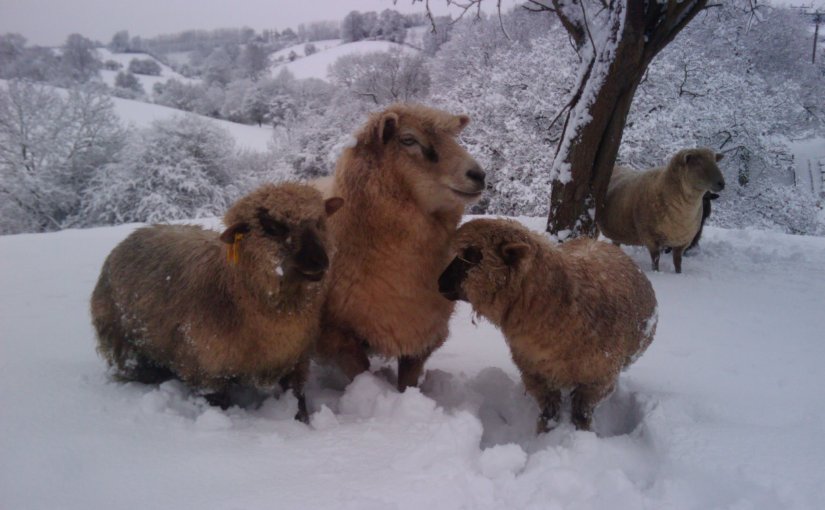
When someone asked why lamb was expensive. I replied that most Antipodean lamb now went to Asia. In addition, winter feed and concentrate costs have risen steeply, and poor prices forced UK producers to reduce numbers. On the plus side for farmers, in late June a 41kg lamb was fetching £94 at Ross.
Supply and demand are major factors in price but so too is fashion! Whether it be clothes or drink, fashion is a factor in demand. For example, there is a fashionable shift from lager to cider driven by foreign drinks brands. British makers are in a minority and even Strongbow is owned by an overseas lager maker. However, I enjoy local ciders from Henry Weston’s of Much Marcle whose apples come from local orchards and not, as with some brands, from imported Chinese syrup.
The phenomenon of changing fashions is not new and back in 1889 WS Gilbert in The Gondoliers put the following words into the mouth of Don Alhambra;
When every blessed thing you hold is made of silver or of gold,
You long for simple pewter.
When you have nothing else to wear, but cloth of gold and satins rare,
For cloth of gold you cease to care – Up goes the price of shoddy.
The message is, that when something becomes commonplace people look for something else. But fashion is not only restricted to choice of products, it also applies in every aspect of life including ideas.
In my youth, the prevailing idea was that the State set only the parameters within which we organised society. As a consequence, voluntary organisations were very important. For example, at chapel we had Plays, Festivals, Youth Clubs, Educational quizzes, Concerts, Sponsored foreign aid, Sunday school and even Literary Readings. We did it all ourselves. Or at least our parents did along with others who organised our lives in productive ways. When we married we then did the same for our children. But times were changing!
The State started paying youth workers, social workers and other ‘helpers’. Insurance and new laws made organising events difficult and the self-confidence of adults was undermined by the growth of so-called experts in education, child care and psychology. On top of that, TV became an inducement to stay at home.
The desire to do things for ourselves was still present but, as voluntary roles were taken over by state agencies, doing things for oneself went out of fashion. In its place came Cradle-to-Grave care by the State. What had been a Society organised from the roots upwards had become a Society driven from the top down.
It’s all changing again, and now people, including those in Britain, are looking for something different. Even politicians seem now to realise that the ‘fashion’ of growing the ‘tree of society’ from the branches downwards has failed, and no longer can they get away with the arrogant assumption that they are the rulers rather than the servants of ordinary folk.
Prominent people are often out of kilter with the changing times as they continue to think that top-down initiatives are the solution to local needs. Even the church sometimes has ideas that take little account of existing local resources or ministries. Top-down perspectives invariably miss half of what is already going on and I wonder for example, if the diocese realises that in many rural parishes about half the population is already involved in small ways in the life of the church. Most attend only rarely but I believe their heart is in the faith and in their local church.
Top-down thinking always reminds me of Great Uncle George who voted Labour and read the Daily Herald, he shared the idea that principled politicians leading from the top could build a better society. His brother, my grandfather John Joseph, was a Conservative who read the Daily Telegraph and who believed that a better society would be built from the bottom by principled individuals making their own choices. Both saw Christian principles as the foundation of society.
Fashions change and, whilst Great Uncle George would be sad at the failure of top-down ideas, Grandad John Joseph would be elated at today’s opportunities for individuals to make their mark.
In an age of globalism. There is something exciting about parochialism. That is, so long as the ruling elites stay out of it.
Mentioning elites reminds me of the Sunday school teacher who taught her class about the powerful Kings and Queens of the Old Testament. ‘But’ she said, ‘There is a Higher Power, does anyone know what it is?’ After a pause: ‘Dennis said,
‘Please Miss is it Aces?’
 View from the Pew